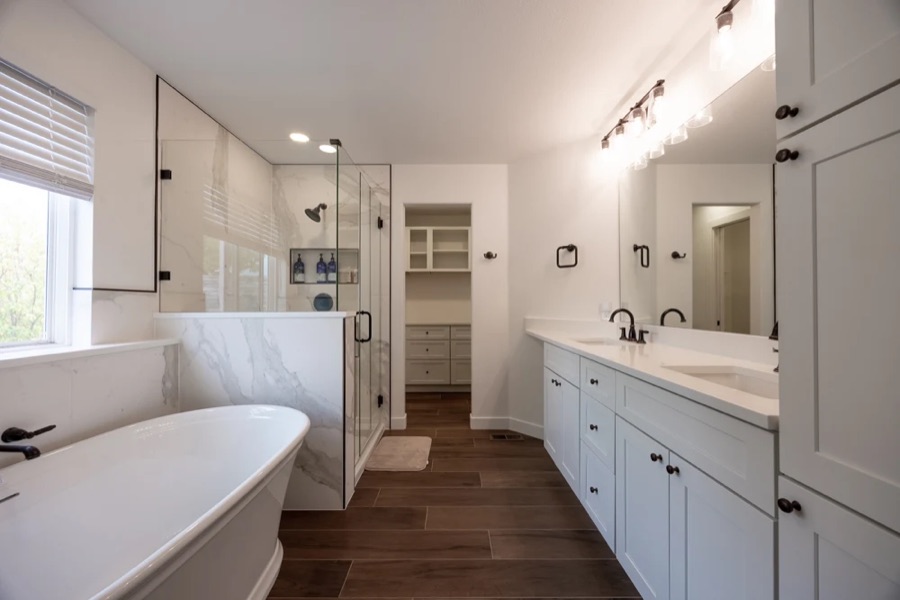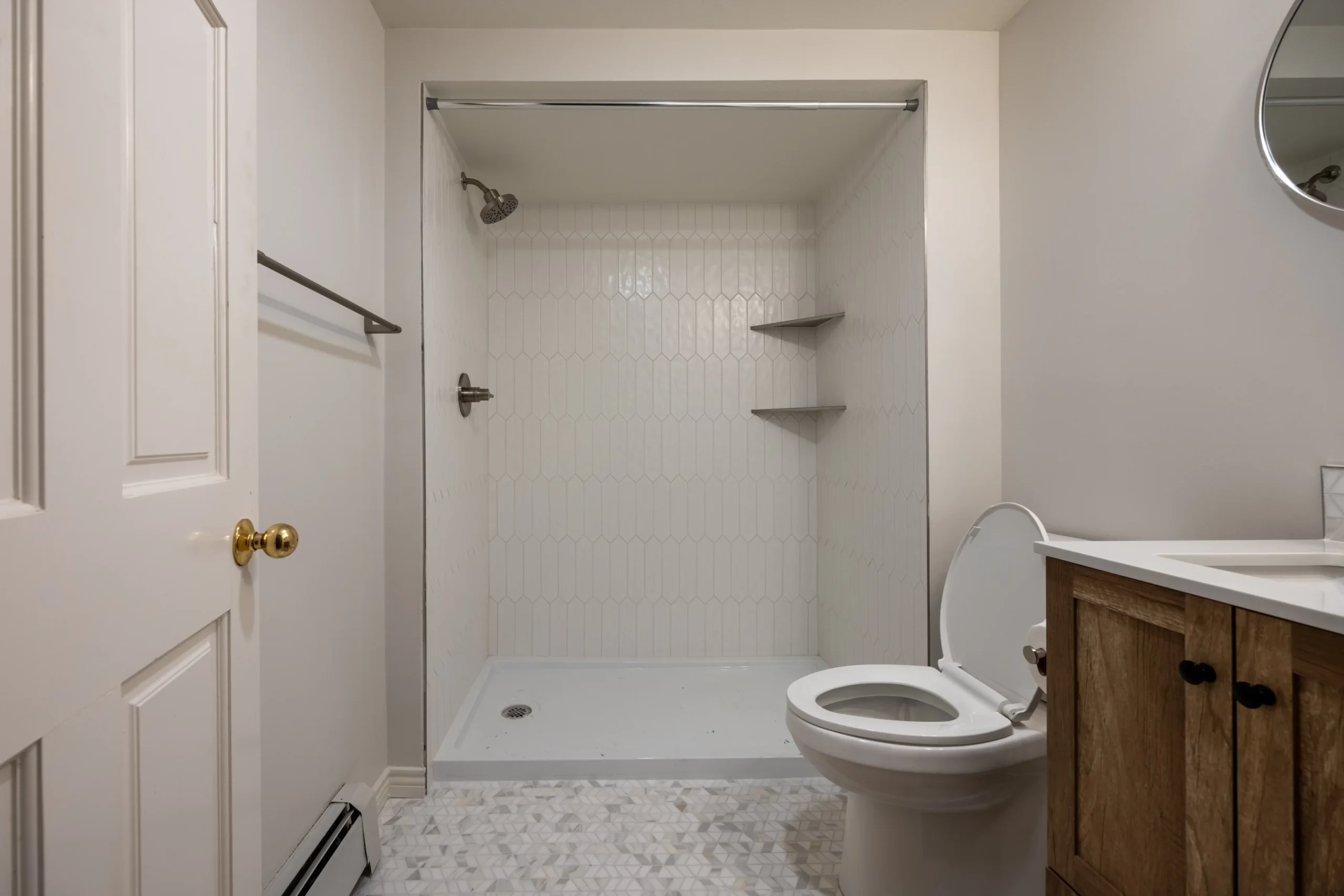
Bathroom Remodeling
5×8 Bathroom Remodel Ideas for New York Homes
Smart layouts, walk-in showers, storage, lighting, and material ideas can make a compact 5×8 bathroom feel larger and work harder.
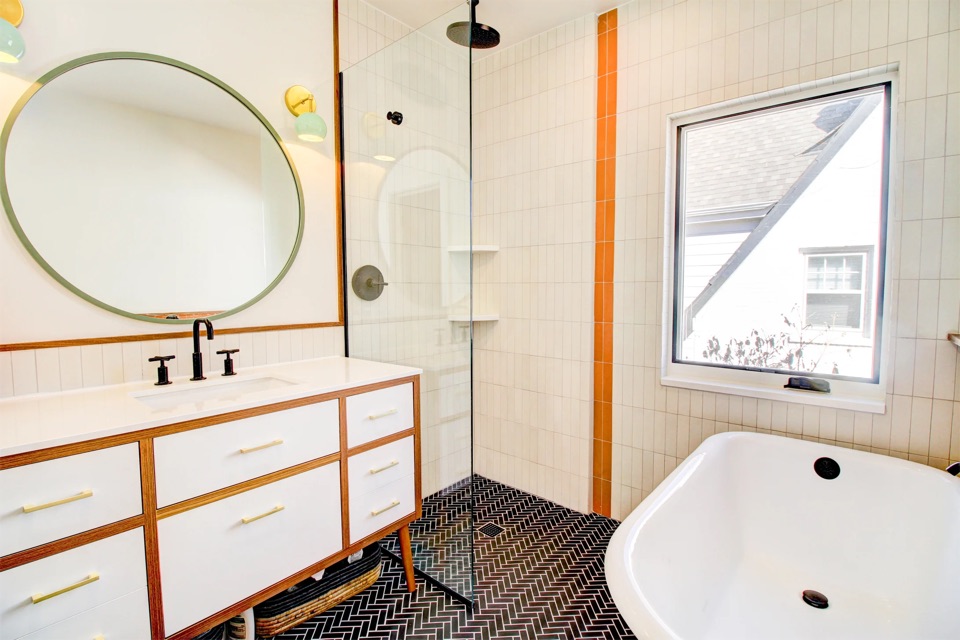
Is your bathroom cramped, outdated, or short on function? A nominal 5×8 room offers only about 40 square feet, yet a measured layout and coordinated fixtures can make it feel more open, modern, and comfortable every day.
- Long-wall layouts, clear-glass showers, and improved toilet clearance produce the largest functional gains.
- Floating vanities, pocket doors, vertical cabinets, recessed storage, niches, and hooks use limited space efficiently.
- Layered lighting, mirrors, color, tile size, and grout layout strongly affect how large the room feels.
- New York plumbing, electrical, approvals, and older-house conditions should be coordinated by the design-build team before demolition.
A “5×8 bathroom” is shorthand, not a finished plan. Actual rooms have uneven walls, fixed doors and windows, plumbing stacks, framing, soffits, radiators, and different users. Prime Craft begins with a site walk and verified measurements, then uses floor plans and 3D views to coordinate the room before construction.
5×8 bathroom remodel ideas
This footprint is common in Brooklyn rowhouses, Queens co-ops, Bronx homes, and Nassau County colonials. The original Prime Craft guide recommends considering the following ideas:
- Keep fixtures along a long wall to simplify plumbing and preserve a familiar flow.
- Replace an unused tub with a walk-in shower to improve sightlines and standing space.
- Adjust fixture placement or vanity depth to increase toilet comfort.
- Install a wall-mounted vanity so more of the floor remains visible.
- Prioritize a larger or curbless shower for daily comfort and accessibility when construction permits.
- Use a pocket door when the wall cavity is suitable and an inward swing creates conflicts.
- Build upward with tall cabinets, open shelving, or a recessed medicine cabinet.
- Add one or more coordinated shower niches instead of hanging storage.
- Use light-reflective colors, deliberate tile layouts, glass, and mirrors to extend sightlines.
Do not select a fixture only because its product width fits on paper. Verify installation space, service access, door and drawer movement, finished wall thickness, nearby fixtures, and the clear area needed to use it comfortably.
Five smart 5×8 bathroom layouts
Keep fixtures in sequence.
Place the vanity near the door, toilet in the middle, and tub or shower at the far end. It is often the simplest plumbing approach.
Open the wet-area sightline.
Replace an unused tub with a walk-in shower and clear glass to make the room feel less segmented.
Rebalance the fixtures.
Shift a fixture where feasible or use a shallower vanity so the toilet zone feels less compressed.
Pair open floor with tall storage.
Mount the vanity off the floor, then recover capacity with vertical or recessed cabinetry.
Focus on access and comfort.
Give more area to a low-threshold or curbless shower while tightening the vanity and storage plan.
Test every swing and reach.
Model the entry door, drawers, toilet zone, shower opening, towel location, controls, and cleaning access together.
1. The standard long-wall layout
This familiar plan places the vanity, toilet, and tub or shower on one wall. Keeping the plumbing concentrated can reduce unnecessary rerouting while still allowing new fixtures, finishes, storage, and lighting. Prime Craft commonly studies this option first when the homeowner wants a more predictable construction scope.
2. Prioritizing shower space
If the tub is not part of the household’s routine, a walk-in shower can create more visual and physical room. Clear glass preserves the line of sight instead of enclosing the wet area behind a curtain. The shower base, drain, threshold, valve, waterproofing, and door geometry still need to be designed as one system.
NYC co-ops and condos may require board approval, alteration paperwork, insurance, and licensed-trade documentation. Prime Craft includes applicable permitting and building coordination in pre-construction so approvals are addressed before the start date.
3. Creating more toilet clearance
An oversized vanity can make a standard toilet position feel uncomfortable. A narrower or shallower vanity, a different storage strategy, or a verified fixture adjustment can recover usable room—especially in a guest bathroom where movement matters more than maximum base cabinetry.
4. Floating vanity with vertical storage
A wall-mounted vanity exposes more floor, which can make the footprint feel lighter and easier to clean. Tall storage, an open shelf, or a recessed medicine cabinet can replace capacity without crowding the lower half of the room. Sizes must be coordinated with plumbing and wall conditions.
5. Larger walk-in shower focus
Some plans dedicate more square footage to a walk-in or curbless shower while tightening the vanity and toilet zones. This can improve access and long-term usability, but drainage, slope, structure, waterproofing, glass, and the floor transition require early technical planning.
What about a pocket door?
A pocket door can recover valuable floor and wall clearance by eliminating an inward swing. The wall cavity must first be checked for plumbing, electrical, structure, framing depth, and required hardware. When a pocket door is not feasible, an outward swing or carefully planned hinged door may still improve the room.
Electrical and lighting considerations
Layer the lighting
Recessed ambient lighting and task lighting at the mirror can distribute illumination more evenly than one ceiling fixture. Layered light supports grooming, limits harsh facial shadows, and keeps a windowless room from feeling cave-like.
Plan ventilation with the ceiling
The exhaust grille should be coordinated with the shower, toilet, lights, ceiling framing, duct route, and replacement air. A properly selected and maintained fan is especially important in compact bathrooms with limited natural ventilation.
Coordinate outlets and switches
Switches near the entry and useful receptacles near the vanity improve daily function. GFCI protection, wet-location ratings, circuits, fixture clearances, and other electrical requirements should be designed and installed by qualified professionals for the applicable jurisdiction.
Storage solutions for a 5×8 bathroom
A small room works better when daily items have a deliberate home. More cabinetry is not always better; storage that blocks movement or overwhelms the walls can make the room feel tighter.
Drawer-based vanity storage
Drawers bring small items forward instead of burying them deep in a cabinet. Their paths must clear the door, toilet, shower glass, and plumbing.
Vertical and recessed storage
Tall cabinets, open shelving, and recessed medicine cabinets use eye-level or upper-wall space. Confirm framing, wiring, plumbing, wall depth, and mounting requirements before selecting a recessed unit.
Shower niches
A built-in niche replaces hanging caddies and can keep the shower floor clear. A standard niche plus a lower shaving niche can improve reach, but both add framing, waterproofing, edges, and tile-layout decisions.
Hooks and accessories
Hooks need less uninterrupted wall length than many towel bars and can make towels easier to place in a tight room. Coordinate them with the door swing, glass, outlets, and walk path.
| Decision | Potential benefit | What to verify |
|---|---|---|
| Drawer-based vanity | Accessible storage for smaller items | Drawer movement around pipes and fixtures |
| Recessed medicine cabinet | Eye-level storage with less projection | Framing, wiring, plumbing, wall depth, and mounting |
| Shower niche | Integrated wet-area storage | Framing, waterproofing, tile layout, and reach |
| Hooks | Uses short sections of wall | Door and circulation conflicts |
| Large mirror | Reflects light and extends sightlines | Proportion, fixtures, outlets, and mounting |
| Layered lighting | Supports grooming and reduces shadows | Wet-location ratings, switching, and circuit needs |
Design and material choices that affect the space
Color and finish selection
Lighter colors can reflect more light, while dark tones can make a concentrated area feel deeper or more dramatic. A compact bathroom does not need to be entirely pale: a dark vanity or shower accent can work when balanced with reflective surfaces, deliberate lighting, and calmer surrounding finishes.
Tile and surface choices
Large-format tile can reduce the number of grout joints, while one continuous material between the main floor and shower can reduce visual boundaries. Floor-to-ceiling wall tile draws the eye upward. Tile size does not automatically reduce labor; cuts, substrate, pattern, lippage tolerances, room geometry, and waterproofing all matter.
| Choice | Effect on space | Recommendation |
|---|---|---|
| Large-format tile, 12×24 or larger | Fewer grout lines and a calmer field | Often useful when the layout works |
| Same or coordinated floor and shower tile | Reduces visual boundaries | Yes, with wet-area suitability verified |
| Floor-to-ceiling wall tile | Draws the eye upward | Yes, when budget and design support it |
| Dark accent tile in the shower | Adds contrast without darkening every wall | Use in balance |
| Frameless glass enclosure | Maintains visual continuity | Often effective |
| Full-width vanity mirror | Reflects light and suggests depth | Often effective |
Glass and mirrors
Clear shower glass lets the eye continue through the wet area. A well-proportioned vanity mirror reflects light and can make the room feel deeper. Frameless glass supports a clean appearance, but its opening, hinges, support, and maintenance should be coordinated with the tile and fixtures.
Shower and bathtub design approaches
Tub-shower combinations
A tub-shower combination preserves bathing flexibility within the familiar footprint. It can be valuable in a hall bath, a home with children, or a property where this is the only tub. The surrounding waterproofing, valve, storage, curtain or glass, and cleaning access still deserve full planning.
Walk-in shower design
A walk-in shower emphasizes openness and ease of use. Clear glass and a low or curbless entry can make the room feel less segmented, but the system requires careful slope, drain, structure, waterproofing, threshold, and enclosure coordination.
Prime Craft develops walk-in shower layouts with measured plans, 3D views, and trade coordination so the approved design, rough plumbing, waterproofing, tile, and glass agree before the finishes go in.
5×8 bathroom layout planning details
Subfloors in older New York homes
Brooklyn brownstones, Queens attached homes, Bronx properties, and Nassau County colonials may have wood framing and several generations of flooring. The subfloor influences tile, deflection, shower-base options, drain work, finished height, and the suitability of heavy materials such as stone. Visible conditions can be reviewed at the site walk; concealed layers may require investigation.
Door swing and clearances
An inward door can consume important space and conflict with the vanity or toilet. A pocket door can help when the cavity is suitable. Whichever door is selected, test entry, privacy, hardware, switch placement, ventilation transfer, and access for maintenance.
Plumbing strategy and approvals
Keeping fixtures on the same wall can reduce complexity. Moving them across the room may require more extensive supply, drain, vent, floor, or ceiling work—especially with older stacks. Permit and inspection requirements vary by scope, municipality, and property. The NYC Department of Buildings renovation guide explains that some bathroom work requires plans or permits; Long Island municipalities and individual buildings have their own processes.
A compact-room planning sequence
- Document finished dimensions, openings, projections, and existing systems.
- Rank bathing, accessibility, toilet clearance, storage, and maintenance priorities.
- Compare the five layout directions using actual fixture dimensions.
- Coordinate plumbing, electrical, ventilation, framing, waterproofing, and approvals.
- Resolve the shower system, vanity, storage, glass, lighting, and major finishes before demolition.
- Build from a clear proposal, construction plan, procurement schedule, and change process.
Serving Brooklyn · Queens · The Bronx · Nassau County · Valley Stream · Long Island
See how these details fit into Prime Craft’s full bathroom remodeling service, including walk-in showers, storage, tile, and accessibility-focused planning.
5×8 bathroom remodeling FAQs
How should I optimize a 5×8 bathroom layout?
Start with verified measurements and real fixture dimensions. Keeping plumbing on one wall can simplify the project, while a shallow or floating vanity, clear-glass shower, and pocket door may improve movement when the existing conditions allow them. There is no universal best plan.
What storage and ventilation features are most useful?
Drawer-based vanities, recessed medicine cabinets where feasible, vertical storage, shower niches, and hooks add capacity without expanding the footprint. Pair them with a properly selected, ducted, and maintained exhaust fan so the room can dry effectively.
How much does a tile shower change the overall budget?
Tile can significantly affect cost because it adds substrate preparation, waterproofing, layout, cuts, edge profiles, grout, and skilled labor. Large-format tile may reduce grout joints, but it does not automatically reduce installation time. Prime Craft prices the selected assembly in the project proposal.
Do I need a permit to remodel a bathroom in Brooklyn, Queens, or Nassau County?
Requirements depend on the plumbing, electrical, structural, and other work, as well as the municipality and property. Co-ops and condos may also require board approval. Prime Craft reviews the defined scope with the applicable authority during pre-construction.
How long does a 5×8 bathroom remodel take?
The original Prime Craft planning range is two to four weeks of active construction after approvals and material readiness. Design, material selections, 3D renderings, permitting, ordering, and other pre-construction work commonly add about four to eight weeks. Each scope, building, and concealed condition can change the schedule.