Bathroom Tile Selection
Porcelain vs. Ceramic Tile for Bathrooms
A practical guide to water absorption, durability, traction, installation, maintenance, and where each tile can work in a Long Island or New York City bathroom.
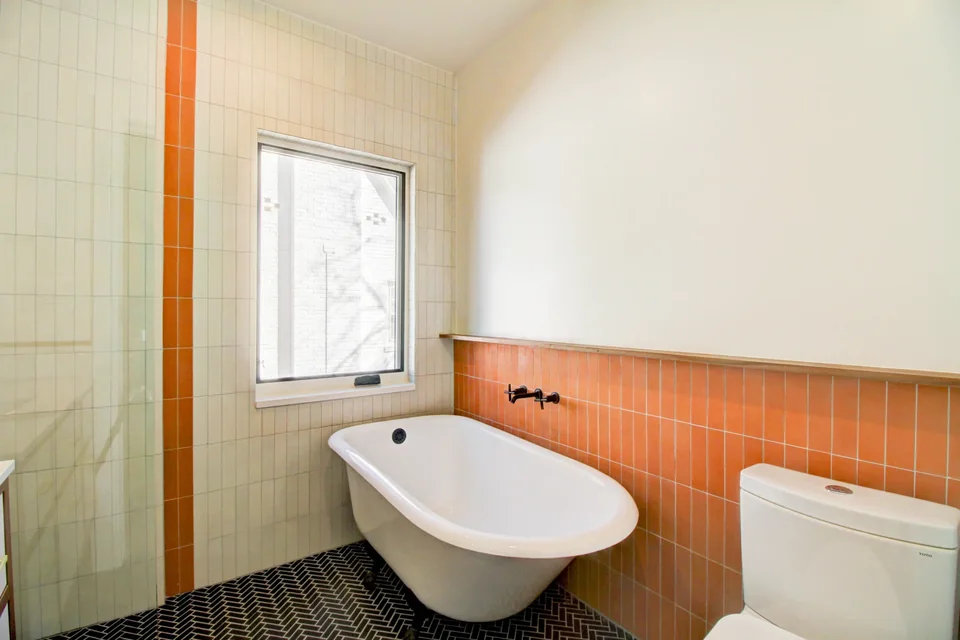
Porcelain or ceramic tile—which is better for a bathroom? Porcelain is a type of ceramic tile made to meet a lower water-absorption threshold. Its density often makes it a strong candidate for bathroom floors, shower walls, and other hard-working surfaces. Non-porcelain ceramic tile is often easier to cut and can provide excellent color, pattern, and value on bathroom walls, backsplashes, and other manufacturer-approved surfaces.
- Porcelain is formally classified by water absorption—not simply by price, weight, color, or appearance.
- Either tile family may work when the specific product is rated for the intended wall, floor, or wet-area use.
- The word “porcelain” does not automatically mean slip-resistant; texture, finish, drainage, and grout joints matter.
- Dense porcelain can be more demanding to cut and set, while ceramic is often easier to work with.
- Tile and grout do not waterproof a shower. The assembly underneath them manages water.
The best bathroom often uses more than one tile. A durable floor, detailed shower, decorative wall, and vanity backsplash do different jobs. During a complete bathroom remodel, Prime Craft coordinates those selections with waterproofing, layout, lighting, fixtures, storage, and the surfaces that meet the tile.
Porcelain is ceramic—but not every ceramic tile is porcelain
Both products begin as mineral and clay-based mixtures that are shaped and fired. “Ceramic tile” is the broader family. “Porcelain tile” is a performance classification within that family.
The Tile Council of North America explains that porcelain tile has water absorption of 0.5% or less when tested using ASTM C373. A tile marketed as porcelain should meet that standard. The Porcelain Tile Certification Agency mark is one way buyers can verify that a product has been tested as true porcelain.
Non-porcelain ceramic tile covers a wide range of products. Many are glazed, and the glaze can be highly durable. Product specifications still matter: one ceramic wall tile should not be assumed to perform like another, and a wall-rated tile should not be moved to a floor simply because the color works.
Porcelain vs. ceramic tile at a glance
| Decision | Porcelain tile | Non-porcelain ceramic tile |
|---|---|---|
| Water absorption | 0.5% or less under the porcelain standard | Varies by product and body |
| Typical strengths | Dense, durable, broad floor and wet-area options | Color and pattern range, wall applications, easier cutting |
| Installation | Can require stronger cutting equipment and product-specific setting materials | Often easier to cut and handle, especially for wall layouts |
| Cost | May cost more for material or installation, but ranges overlap | Often offers more entry-price choices, though designer tile can be expensive |
| Best selection rule | Confirm the manufacturer-approved area of use, finish, traction classification, maintenance, and installation requirements. | |
Which tile handles bathroom water better?
Porcelain absorbs less water through its body, which is useful in frequently wet and high-use settings. That does not mean every porcelain tile belongs on every shower floor. Polished porcelain, large pieces, or a surface not classified for the intended use may be wrong for a particular floor even though the tile qualifies as porcelain.
Glazed ceramic tile can be suitable for shower walls, tub surrounds, and other bathroom surfaces when its manufacturer approves the application. The glaze is the visible wear surface, so chips, edge details, cut edges, and trim need to be planned as part of the layout.
Before ordering either material, check:
- Whether the tile is approved for walls, residential floors, shower walls, shower floors, or submerged applications.
- Whether a mesh-mounted mosaic and its adhesive are approved for the intended wet area.
- Whether the finish, texture, and grout-joint plan suit the expected water and cleaning routine.
- Which mortar, grout, movement joints, waterproofing, and preparation the tile manufacturer requires.
Porcelain is not automatically less slippery
Traction is a property of the specific surface and installation—not a simple porcelain-versus-ceramic choice. A polished tile can behave differently from a matte or textured tile made from the same general material. Soap, standing water, cleaning products, footwear, drainage, slope, surface wear, and maintenance all affect real-world slip risk.
The Tile Council’s current DCOF guidance explains that slip resistance and the measured dynamic coefficient of friction are not synonymous. Product-use classifications help with selection, but the specifier still has to consider the actual room. Shower floors are especially specific because tile size, grout joints, slope, drainage, surface structure, contaminants, and barefoot use interact.
Smaller shower-floor tiles are common because their grout joints can follow the slope toward the drain and provide additional texture underfoot. That is a design tendency, not a universal rule. Some larger-format products and shower systems are specifically designed for suitable layouts; the drain geometry and manufacturer instructions must support them.
Durability, chips, stains, and maintenance
Porcelain’s dense body generally supports demanding floor applications. Through-body or color-body products can make chips less visually obvious because the body color is closer to the surface. Glazed porcelain and glazed ceramic rely on the properties of their finish, so abrasion rating, edge treatment, and intended use remain important.
For ordinary bathroom care, the finish and grout system often matter more than the family name. Highly textured tile may improve grip but hold residue more readily. High-gloss walls can wipe down easily but show spotting. Light grout can brighten a small room while requiring a more disciplined cleaning routine. Epoxy, single-component, and cementitious grouts each have product-specific installation and care instructions.
Many glazed ceramic and porcelain surfaces do not need routine sealing. Certain polished, unglazed, specialty, or textured materials may require treatment, and cementitious grout often benefits from sealing. Always follow the written instructions for the exact tile and grout rather than applying a blanket rule.
Appearance, layout, and installation complexity
Both porcelain and ceramic are available in many colors, patterns, formats, and textures. Porcelain is widely used for stone-, concrete-, and wood-look surfaces and for large-format installations. Ceramic is especially strong in decorative wall tile, saturated glazes, dimensional shapes, handmade looks, and traditional subway formats.
The material is only part of the design. A professional tile installation plan also resolves:
- Where full tiles and cuts will land around a vanity, niche, bench, drain, tub, and doorway.
- How tile thickness meets adjacent flooring, trim, glass, plumbing escutcheons, and wall finishes.
- Whether the substrate is sufficiently flat and stable for the selected format.
- How grout width, color, movement accommodation, and corner details support the design.
- Whether the installer has suitable tools and mortars for a dense or large-format product.
Porcelain may carry additional cutting and labor demands, particularly with large pieces, mitered edges, penetrations, detailed niches, and book-matched patterns. Ceramic wall tile is often more forgiving to cut, but handmade and irregular products can require careful sorting and layout. Material price alone does not predict installed cost.
Where porcelain and ceramic can work in a bathroom
Start with use classification and traction.
Porcelain is a frequent choice because of its density and range of floor-rated finishes. Floor-rated ceramic can also work. Check the exact product, substrate, finish, and expected wet use.
Design around slope, drainage, and bare feet.
Mosaics and textured products are common, but no material label guarantees suitability. Confirm shower-floor approval and coordinate the tile with the drain and waterproofing system.
Both families offer strong options.
Porcelain and approved glazed ceramic can perform well. Consider weight, format, edge details, cleaning, niches, fixtures, and how the selected trim completes exposed edges.
Use the freedom of a lower-water surface.
Decorative ceramic tile can deliver color and character, while porcelain can continue a floor or stone-look palette. A powder room may allow choices that would not suit a shower floor.
A compact room also changes the visual decision. Review our guide to planning a 5×8 bathroom for layout, storage, door, lighting, tub, and shower considerations before choosing a tile size.
The tile is visible; the waterproofing does the hidden work
A shower can be covered in premium porcelain and still fail if the assembly behind it is wrong. Tile and grout are not the waterproofing layer. Water has to be managed through a complete method that addresses the base, walls, drain connection, corners, seams, penetrations, curb or entry, and movement.
The Tile Council advises that grout joints are not waterproof and that wet areas should rely on the method and substrate to protect adjoining construction. Waterproof membrane systems have their own standards and installation instructions. Mixing incompatible products or treating one visible coat as a complete system can create vulnerabilities at transitions.
Prime Craft coordinates the tile choice with the shower assembly during planning—not after the walls are ready. That sequence helps resolve tile dimensions, niche locations, drain placement, floor height, glass measurements, and fixture penetrations before the finish work begins. See our primary bathroom remodeling and guest bathroom remodeling pages for the broader scope around the tile.
How to make a confident tile selection
- Name the surface. A vanity backsplash, main floor, tub wall, shower wall, and shower floor need separate decisions.
- Confirm approved use. Read the manufacturer’s technical sheet instead of relying only on the showroom label.
- Evaluate the room. Consider traffic, water, ventilation, natural light, cleaning habits, users, and accessibility needs.
- Coordinate the system. Select waterproofing, substrate preparation, mortar, grout, profiles, movement joints, and sealant as compatible parts.
- Approve a layout. Dry planning on paper—or with field mockups—prevents awkward slivers and misaligned focal points.
- Order responsibly. Include a project-specific overage for cuts, breakage, pattern matching, attic stock, and lot consistency.
Tile is one part of the full room investment. For broader planning, read how much a bathroom remodel can cost on Long Island and in New York City. Then review completed work in our Valley Stream bathroom transformation and Queens Village bathroom project.
Frequently asked questions
Is porcelain or ceramic tile better for a bathroom?
Neither material is automatically best for every bathroom surface. Porcelain’s low water absorption and density often make it a strong floor and high-use wet-area option. Glazed ceramic can be an excellent wall, backsplash, and lower-traffic choice. The manufacturer’s approved area of use, traction, substrate, waterproofing, layout, and installation method should decide the selection.
Can ceramic tile be used in a shower?
Yes, when the manufacturer rates that specific ceramic tile for the intended shower application and it is installed over a suitable waterproof assembly. Confirm whether the product is approved for shower walls, shower floors, or both; those are not interchangeable approvals.
Does porcelain tile make a shower waterproof?
No. Tile and grout are finish materials, not the complete waterproofing system. A shower needs an appropriate waterproof or water-management assembly behind or beneath the tile, integrated with the drain, seams, corners, and penetrations.
Is porcelain tile more slippery than ceramic tile?
The family label does not determine traction. Surface texture, finish, tile size, grout joints, drainage, contaminants, maintenance, footwear, and the manufacturer’s use classification all matter. Check the specific product rather than assuming one material is safer.
Do porcelain and ceramic bathroom tiles need to be sealed?
Many glazed ceramic and porcelain surfaces do not require routine sealing, but some unglazed, polished, textured, or specialty products may. Cementitious grout commonly benefits from sealing unless the selected system says otherwise. Follow the tile, grout, and setting-system manufacturers’ instructions.
Why can porcelain tile cost more to install?
Dense porcelain can require suitable cutting equipment, mortars, handling, and additional labor, especially for large-format pieces or detailed layouts. Preparation, waterproofing, pattern, tile size, room access, substrate condition, and finish details also affect installed cost.
Sources and further reading
- Tile Council of North America: Porcelain vs. Non-Porcelain
- Tile Council of North America: Dynamic Coefficient of Friction FAQs
- Tile Council of North America: Ceramic Tile FAQs
- Schluter Systems: Essential Water Management in Tiled Showers
Project-specific note: Tile selection and installation requirements vary by product, substrate, room, building, and scope. This guide is educational and does not replace the manufacturer’s data, applicable codes, or an on-site evaluation.
Plan the Whole Assembly
Choose tile for the room you are actually building.
Share your city, ZIP code, bathroom goals, and project photos. Prime Craft will help determine whether the scope fits our design-build process.