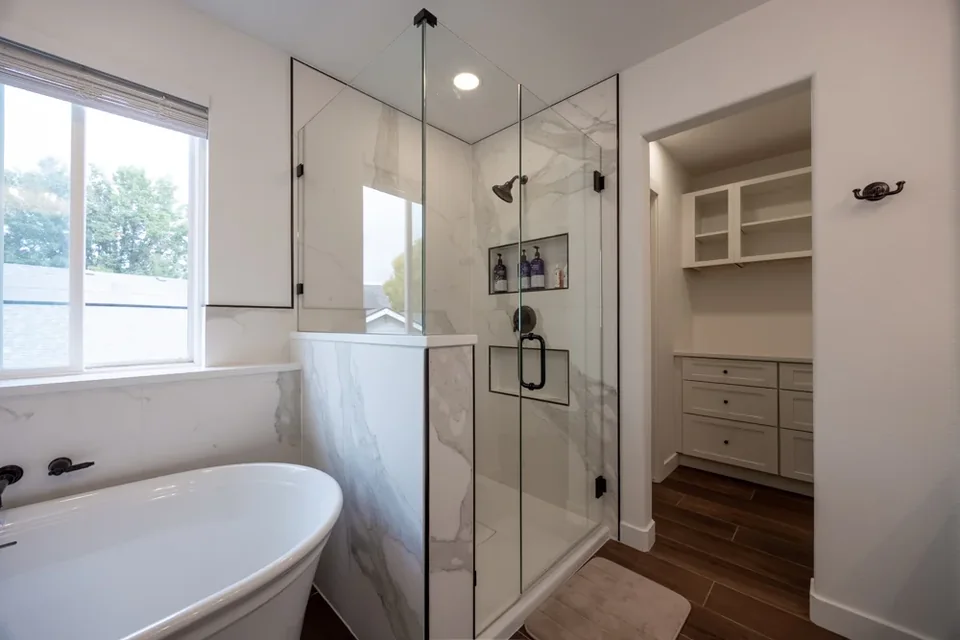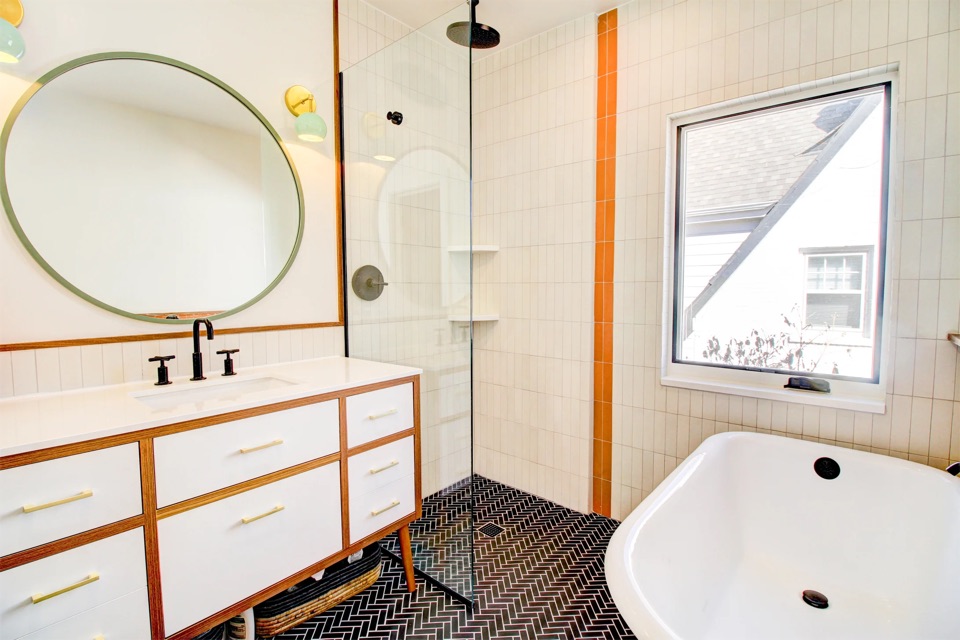
Bathroom Remodeling Costs
How Much Does a Bathroom Remodel Cost in 2026?
A practical guide to national cost data, Prime Craft’s starting price tiers, timelines, permits, and the scope decisions that shape a bathroom remodel on Long Island or in New York City.
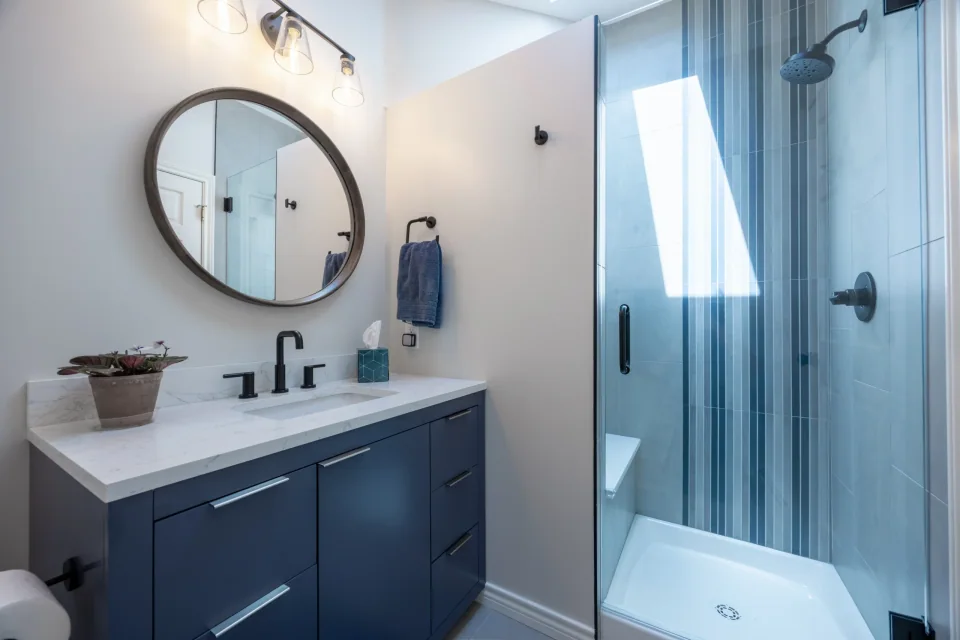
How much does a bathroom remodel cost? Prime Craft currently lists qualifying bathroom projects starting at $10,000 for a basic scope, $15,000 for an average remodel, and $20,000 for a high-end remodel. Those figures are planning entry points—not flat-price packages, quotes, caps, or guarantees. The final investment depends on the room, design, existing conditions, permit requirements, trade work, and selected materials.
- National medians are useful context, but they do not price a specific New York bathroom.
- Keeping the layout and plumbing locations can control complexity; moving them can add trade work and approvals.
- Waterproofing, tile preparation, ventilation, and hidden conditions matter as much as visible finishes.
- A reliable proposal defines inclusions, exclusions, allowances, schedule assumptions, and change procedures.
- Prime Craft’s timelines refer to active construction after design, approvals, and materials are ready.
Homeowners who want project-specific guidance can review Prime Craft’s current bathroom remodeling pricing for Long Island and New York City. This guide explains what the published starting prices can include, why real projects move above them, and how to compare estimates without relying on one headline number.
What current national bathroom cost data says
The 2026 U.S. Houzz & Home Study, based on renovation activity reported for 2025, found a $15,000 national median spend for primary bathrooms and a $7,000 median for guest bathrooms. For major primary bathroom remodels, the median was $18,000 in rooms under 100 square feet and $30,000 in rooms of 100 square feet or more. At the 90th percentile, those major projects reached $44,000 and $75,000, respectively.
Those figures show how quickly size and scope widen the range. They are survey medians across the United States—not average contractor bids, New York price lists, or promises about a particular room. A median is the midpoint: half of reported projects were above it and half were below it. The data also blends different locations, property types, material levels, and degrees of professional involvement.
Houzz’s 2025 Bathroom Trends Study reported that 84% of surveyed homeowners hired professionals for their bathroom renovation. That matters because a professionally managed remodel often includes design coordination, demolition, skilled trades, waterproofing, finish installation, inspections, and project management that a product-only or DIY comparison leaves out.
Use research as a benchmark, not a bid. A useful local price comes after the contractor has reviewed dimensions, access, visible conditions, intended layout, fixture specifications, finish expectations, and applicable approvals.
Prime Craft bathroom remodeling starting prices
The three tiers below reflect Prime Craft’s current published planning levels. They help homeowners identify a likely starting conversation; the written estimate is still based on the actual room. A compact bath with difficult access or concealed damage can cost more than a larger room with straightforward conditions.
Basic Bathroom Remodel
From $10K Typical active construction: 4–5 business days- Existing main layout and plumbing locations remain
- Stock or prefabricated vanity and countertop
- Standard fixtures, mirror, and lighting
- Straightforward tub, surround, tile, flooring, paint, and finish work
Average Bathroom Remodel
From $15K Typical active construction: 7–10 business days- Upgraded vanity, hardware, and countertop
- Coordinated tile layout and shower niche
- Updated lighting, ventilation, mirror, and storage
- Mid-range plumbing fixtures and finish selections
High-End Bathroom Remodel
From $20K Typical active construction: 2–3 weeks- Custom cabinetry or project-specific layout changes
- Premium tile, stone, or heated-floor options
- Frameless glass and a specialty shower or tub
- Layered lighting, upgraded fixtures, and custom details
Important: these starting figures and timeframes are guides only. A premium primary suite can rise well beyond $20,000 as features and complexity increase. Timelines begin after design, permits or building approvals, and required materials are ready. Inspection timing, specialty products, layout changes, and concealed conditions can extend the schedule.
Seven factors that change bathroom remodel cost
1. Room type, size, and intended use
A small powder room remodel usually has fewer wet-area components than a full bath. Guest bathroom remodeling often centers on durable shared use, while a primary bathroom renovation may add a larger shower, double vanity, separate tub, more cabinetry, and layered lighting. Size matters, but fixture count and function are often more revealing than square footage alone.
2. Layout and plumbing locations
Replacing a toilet, vanity, and shower in their current positions is usually more direct than moving drains, water lines, vents, or walls. A tub-to-shower change may require drain, valve, waterproofing, and glass decisions even when the footprint stays similar. See the separate guide to what shapes tub-to-shower conversion cost before assuming it is a one-for-one swap.
3. Waterproofing, tile, and substrate preparation
Tile pricing is only one line in a larger assembly. Demolition, floor flattening, backer or membrane systems, shower pans, niches, edge profiles, pattern layout, grout, movement joints, and transitions all affect labor and materials. Prime Craft’s bathroom tiling service treats surface preparation and water management as part of the installation—not an invisible shortcut behind attractive tile.
4. Fixtures, cabinetry, glass, and specialty features
Stock vanities and standard fixtures can support a controlled scope. Custom storage, stone tops, wall-mounted fittings, frameless glass, a freestanding tub, body sprays, or a custom steam shower add product, coordination, and installation requirements. Even shower glass has long-term care implications; our guide to protecting shower glass from hard water explains why maintenance belongs in the selection conversation.
5. Electrical, ventilation, heating, and comfort
New lighting zones, receptacles, exhaust, electric floor warming, mirrors, controls, or upgraded circuits can change the trade scope. Efficient fixtures can be considered without sacrificing performance: the U.S. EPA says WaterSense-labeled plumbing products are independently certified for water efficiency and performance. Product specifications still need to match the home’s pressure, plumbing, and design.
6. Existing and concealed conditions
Water damage, mold, undersized wiring, deteriorated plumbing, uneven framing, inadequate subfloors, or old layers discovered after demolition can require corrective work. A careful site review reduces assumptions, but no contractor can responsibly guarantee what is fully concealed. The proposal should explain how discoveries are documented, priced, and approved.
7. Access, protection, and occupied-home logistics
Apartment rules, elevator protection, limited parking, narrow stairs, debris routes, work-hour limits, and the need to keep another bathroom operational can all affect sequencing. A guest bathroom may still require a detailed household plan when it is the only usable bath during construction.
Bathroom permits on Long Island and in New York City
Permit requirements depend on the jurisdiction, property, and exact scope. The New York City Department of Buildings says construction plans and permits may be required based on complexity and that most kitchen and bathroom renovations require an ALT2 filing. Its examples include adding a bathroom, rerouting gas while adding electrical outlets, and moving a load-bearing wall.
Long Island is not one permitting jurisdiction. Towns, cities, and incorporated villages administer their own requirements. The Village of Valley Stream Building Department, for example, is the local authority homeowners can contact about applications and requirements. Co-ops and condominiums may also require alteration agreements, insurance documentation, board review, deposits, and restricted work hours.
Permit fees are only part of the budget effect. Drawings, professional filings, licensed trade work, inspections, and review time can matter more. Prime Craft confirms applicable requirements during pre-construction rather than assuming one rule applies everywhere. Check whether your community falls within the company’s Long Island and New York City service areas.
How to build a bathroom budget that survives real decisions
Begin with the work the room must accomplish, then separate must-haves from upgrades. If reliable waterproofing, better storage, ventilation, and easier movement are priorities, protect those in the budget before adding decorative features. A smaller, well-coordinated scope is usually more useful than an ambitious list held together by unrealistic allowances.
Make selections early enough to price them accurately. “Tile allowance,” “vanity allowance,” and “fixtures by owner” can hide large differences unless quantity, quality, freight, tax, trim pieces, and installation are understood. The 5×8 bathroom planning guide shows how deliberate layout and storage choices can help a compact bath work harder without chasing size.
Discuss a contingency strategy for concealed conditions, but do not treat it as permission for vague pricing. Houzz’s 2026 study reported that 37% of homeowners exceeded their initial renovation budget in 2025; among the reasons, 35% intentionally chose higher-end materials and 31% expanded scope during the project. A written decision process helps distinguish an unforeseen repair from an optional upgrade.
Bathroom remodeling proposal checklist
Price becomes meaningful only when it is attached to a defined scope. Prime Craft’s design-build remodeling process develops the room, selections, and construction plan before work begins. When comparing proposals, look for clear answers to each of these questions:
| Proposal area | What to confirm |
|---|---|
| Demolition and protection | What is removed, what remains, how access is protected, and who handles disposal? |
| Construction scope | Which framing, plumbing, electrical, ventilation, waterproofing, tile, painting, glass, and finish tasks are included? |
| Products and allowances | Which exact selections are priced, and which amounts remain allowances? |
| Permits and inspections | Who prepares documents, submits filings, pays fees, schedules inspections, and closes the work? |
| Schedule assumptions | What must arrive before the start, what does the construction range cover, and what can extend it? |
| Changes and discoveries | How are concealed conditions and homeowner-requested changes documented and approved? |
| Communication and closeout | Who leads the project, how often are updates shared, and what walkthrough and follow-up are included? |
Ask for the exclusions too. A low total can become expensive when essential trade work, prep, disposal, painting, glass, or final fixtures are missing. Prime Craft explains how project updates and decisions are communicated so homeowners know where progress photos, questions, and approvals belong.
Three real bathrooms—and why the scopes differ
Completed work makes the cost drivers easier to see. These projects are not price comparisons; each had its own property, design, and conditions.
- Valley Stream: two bathrooms were planned around a growing family. The primary suite gained a freestanding tub, walk-in shower, storage changes, and a pocket-door water closet, while sequencing kept a bathtub available for two young children. Tour the Valley Stream two-bathroom transformation.
- Jamaica, Queens: a four-week project renewed primary, guest, and basement bathrooms with room-specific vanities, lighting, fixtures, tile, and showers while maintaining a consistent level of craftsmanship. Explore the three-bathroom Jamaica project.
- Queens Village: Prime Craft recovered an abandoned bungalow remodel and coordinated a zero-entry shower, freestanding tub, heated flooring, custom vanity, expressive tile, and plumbing work affecting the room below. See the Queens Village bathroom recovery.
Browse the full featured remodeling project portfolio to compare the layouts, materials, and planning behind additional bathrooms and connected renovation scopes.
Planning payment options
Some homeowners pay from savings; others want to compare third-party financing with their available cash and credit options. Prime Craft’s home-improvement financing page connects homeowners to its financing partner for current options. Availability, approval, rates, amounts, and terms are determined by participating lenders—not by Prime Craft. Financing should be evaluated against the final written scope, not used to turn a starting price into a guaranteed project cost.
Bathroom remodel cost FAQs
What is the average bathroom remodel cost in 2026?
Houzz reported a $15,000 national median for primary bathroom renovations completed in 2025 and published in its 2026 study. Major primary bathrooms under 100 square feet had an $18,000 median, while those 100 square feet or larger had a $30,000 median. These national survey figures are reference points, not local quotes.
Can Prime Craft complete a bathroom remodel starting at $10,000?
Prime Craft currently lists a basic bathroom remodel starting at $10,000 for a qualifying, focused scope that keeps the main layout and plumbing locations. It is not a flat-price package or guarantee. Room size, demolition, existing conditions, trade work, permits, and selections determine the project-specific price.
What costs the most in a bathroom remodel?
Labor and trade coordination, plumbing or electrical changes, waterproofing and tile, cabinetry, glass, fixtures, layout changes, permit requirements, and concealed conditions can all materially affect cost. The largest driver varies with the existing room and final design.
How long does a bathroom remodel take?
Prime Craft’s current planning ranges are 4–5 business days for a qualifying basic refresh, 7–10 business days for an average remodel, and 2–3 weeks for a high-end bathroom. These ranges cover active construction after design, approvals, and materials are ready; more complex scopes can take longer.
Does a bathroom remodel need a permit in Long Island or New York City?
Permit requirements depend on the jurisdiction, property, and scope. New York City says many bathroom renovations involving multiple work types require an ALT2 filing, while Long Island towns and villages administer their own rules. The final scope should be checked with the applicable authority before work begins.
Can bathroom remodeling be financed?
Prime Craft provides access to third-party home-improvement financing information through its financing partner. Availability, rates, terms, and approval are determined by participating lenders. Financing does not change the need for a project-specific scope and proposal.
Why can an estimate change after the site visit?
Early pricing may be based on limited information. Field measurements, material selections, permit needs, plumbing and electrical requirements, and visible or concealed conditions can change the defined scope. A written proposal should identify inclusions, exclusions, and allowances.
Is it less expensive to remodel multiple bathrooms together?
Planning multiple bathrooms together may create coordination efficiencies, but it does not automatically lower the total cost. Each room still requires labor, fixtures, finishes, waterproofing, and trade work. The household also needs a sequencing plan that keeps an essential bathroom available when necessary.
Research sources
- 2026 U.S. Houzz & Home Study: Renovation Trends
- 2025 U.S. Houzz Bathroom Trends Study
- NYC Department of Buildings: Renovating Kitchens & Bathrooms
- Village of Valley Stream Building Department
- U.S. EPA WaterSense Product Specifications
Based in Valley Stream · Serving Nassau County · Suffolk County · Brooklyn · Queens · The Bronx